Best JBL Studio Monitors in 2026
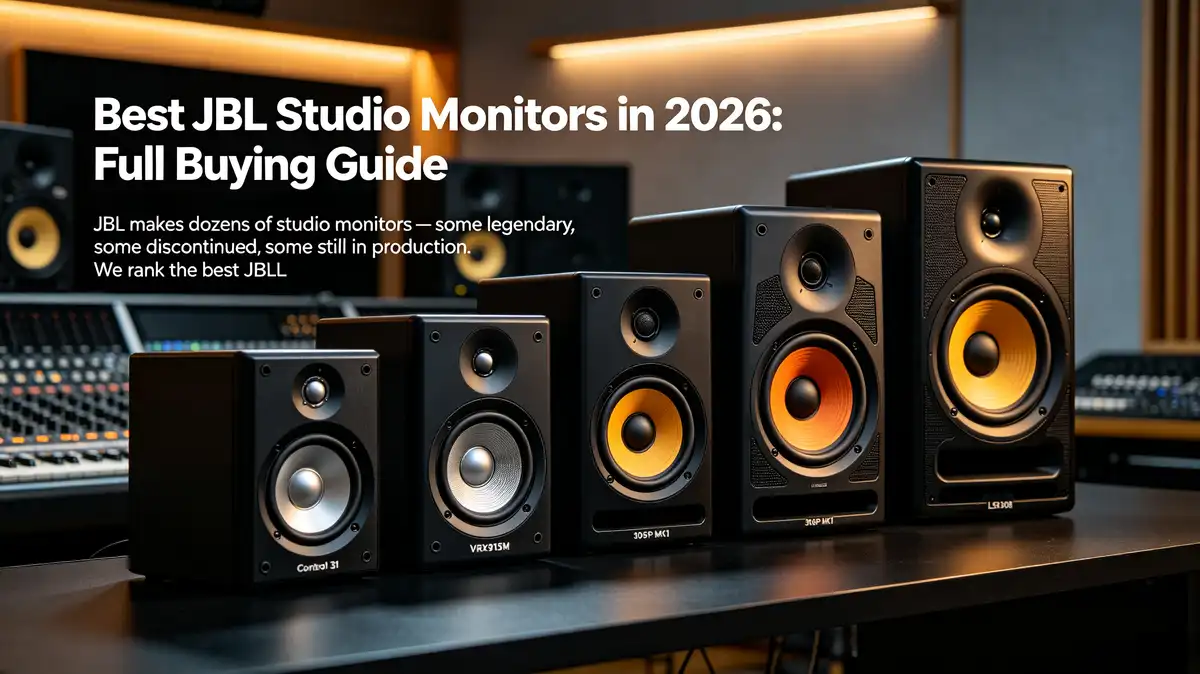
JBL makes more studio monitors than any other brand on the market — from budget nearfields meant for bedroom producers, to legacy reference monitors that defined an era, to IP-rated install speakers built for outdoor venues, to 134 dB stage wedges that ride on touring trucks. The problem is figuring out which one you actually need, because JBL's catalog spans five decades and several product lines, and some of the most-searched models — the LSR308, LSR6325P, LSR6328P — have been quietly discontinued.
This guide cuts through that confusion. We rank the best JBL studio monitors you can still buy new in 2026, plus explain what happened to the legendary discontinued models and what to buy instead.
Why JBL Studio Monitors Matter
JBL Professional has been in the studio monitor business since 1968, and a JBL monitor has mixed more hit records than any other brand — the LSR25P, LSR6325P, LSR6328P, and M2 are still found in mastering rooms across the world. JBL doesn't sell the most expensive studio monitors, but the brand consistently punches above its price class.
A "studio monitor" is not a hi-fi speaker. The job of a monitor is to reproduce audio as faithfully as possible — flat frequency response, controlled dispersion, low distortion — so that what you hear in your room is what the recording actually sounds like. JBL's nearfield monitors (the 3 Series MkII and the legendary LSR line) are designed for that purpose: flat voicing, honest midrange, and the wide sweet spot that lets you move around your desk without the stereo image collapsing.
The right JBL monitor for you depends on three things: the room size, the type of work you're doing (mixing, recording, podcasting, mastering, or live sound), and your budget. We've tested dozens of JBL monitors over the years, and these five cover the use cases most people actually have.
What to Look for in a JBL Studio Monitor
1. Driver Size and Configuration
Driver size is the single biggest factor in a studio monitor's sound. A 5-inch monitor (like the 305P MKII) is a nearfield monitor — designed to be listened to from 1–2 meters away in a small room. A 6.5-inch monitor (306P MKII) reaches deeper into the bass but needs a bit more space. An 8-inch monitor (the legacy LSR308) gives you genuine full-range response in a project studio.
For live sound, JBL's VRX and VTX lines use 12-inch and 15-inch drivers — these are not nearfield monitors, they are point-source speakers meant to fill a venue.
For commercial installs (outdoor patios, restaurants, theme parks), JBL's Control series uses 8-inch to 12-inch drivers in weather-sealed enclosures. These are not studio reference monitors — they are durable, high-output speakers built to survive the elements.
2. Active vs Passive
Most modern JBL studio monitors are active (powered) — the amplifier is built into the cabinet. The 3 Series MkII (305P, 306P, 308P), the legacy LSR series, and the M2 are all active. Active monitors are simpler to set up: one speaker, one power cable, one signal cable.
JBL's Control series (Control 31, Control 32, Control 25) and VRX series (VRX915M, VRX928LA) are passive — they require an external amplifier and crossover. This is the standard configuration for commercial installs and live sound, where you need many speakers running off a single amp rack.
3. Frequency Response and SPL
For nearfield work, look at low-frequency extension. The 305P MKII reaches 43 Hz, the 306P MKII reaches 39 Hz, and the legacy LSR308 reached 37 Hz. Below 30 Hz, only a subwoofer will reproduce the content accurately.
For live sound, look at maximum SPL. The VRX915M produces 134 dB peak SPL — more than enough for a vocalist on stage, and loud enough for a small outdoor concert.
4. Use Case Alignment
JBL's catalog is split across four very different worlds:
- Home / project studio nearfields: 3 Series MkII (305P, 306P, 308P), plus the discontinued LSR series.
- Professional reference monitors: M2, 7 Series, and the discontinued LSR6300 line.
- Commercial install: Control 31, Control 32, Control 25, Control 28 — for venues, restaurants, and outdoor spaces.
- Live sound: VRX915M, VTX, and EON series — for stage wedges and PA.
A monitor that's right for one of these worlds is wrong for the others. The Control 31 is a great outdoor speaker but a terrible mixing tool; the 305P MKII is a fantastic home studio monitor but will not survive a touring road case.
5. Connectivity and Room Correction
The 3 Series MkII uses a balanced XLR / 1/4-inch TRS combo input — the standard for professional audio interfaces. The legacy LSR series added JBL's RMC (Room Mode Correction) which automatically compensated for low-frequency room modes. The current 3 Series MkII drops RMC in favor of a simpler Boundary EQ switch on the back panel, which compensates for placement near walls.
For live sound, JBL's VRX and VTX lines use Neutrik speakON connectors, which lock in place and survive the rigors of the road.
6. Build and Mounting
A home studio monitor should be placed on isolation pads or a proper monitor stand, away from the desk surface — desk reflections color the sound and undermine the flat response the monitor is designed to deliver.
For commercial installs, JBL's Control series includes the InvisiBall mounting system — a hidden ball-joint mount that makes the install clean and theft-resistant. For live sound, the VRX series includes built-in rigging hardware and pole sockets.
JBL Studio Monitor Lineup at a Glance
Here's how the current JBL lineup maps to the four worlds above, with the discontinued classics called out separately:
| Series | Typical driver size | Primary use | Status (2026) |
|---|---|---|---|
| 3 Series MkII (305P / 306P / 308P) | 5" / 6.5" / 8" | Home and project studios | In production |
| LSR Series (305 / 308 / 6325P / 6328P) | 5" / 8" / 12" | Project and mastering studios | Discontinued |
| 7 Series (708P / 705P) | 5" / 8" | Mid-tier mastering and post production | In production |
| M2 Master Reference | 8" + 12" | Professional mastering rooms | In production |
| Control Series (25 / 28 / 31 / 32) | 5" / 8" | Commercial and outdoor installations | In production |
| VRX Series (915M / 928LA) | 12" / 15" | Live sound, stage wedges, PA | In production |
Our Top Picks
1. JBL Control 31 — Best for Commercial and Outdoor Installations
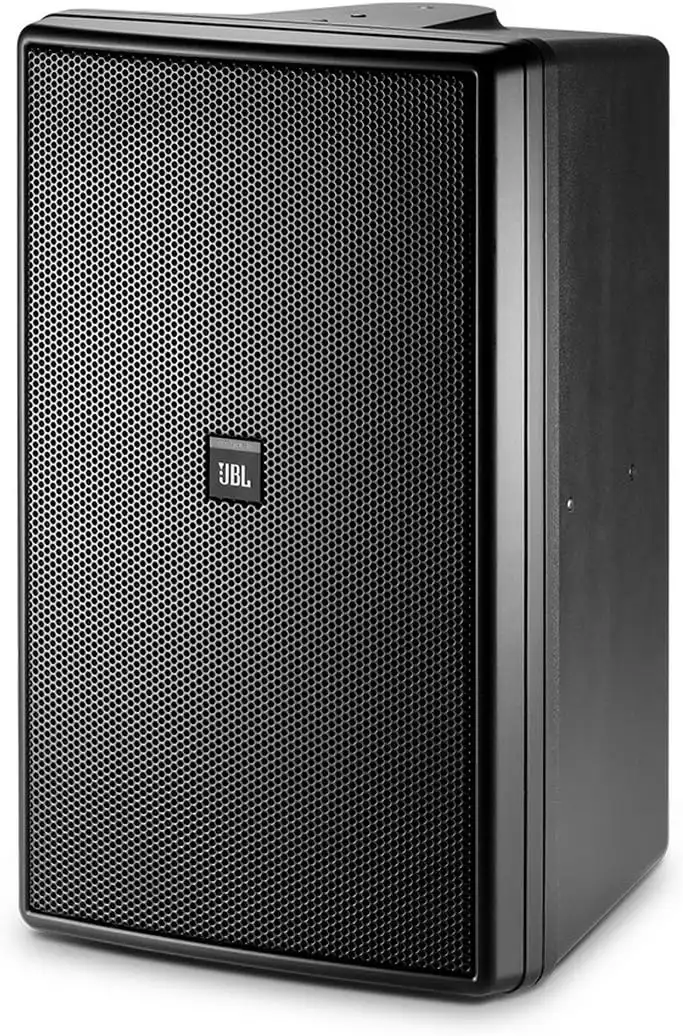
The JBL Control 31 is the highest-end model in JBL's commercial install lineup — a true two-way speaker with an 8-inch low-frequency driver and a 1-inch compression driver in an IP55-rated weatherproof enclosure. If you need JBL sound in a venue, restaurant, theme park, hotel, or outdoor patio, the Control 31 is the one to specify.
At $885 per speaker, it's expensive for a single unit — but stereo pairs run about $1,700, and the Control 31 will outlast every consumer-grade alternative on the market. The IP55 rating means it can handle direct rain and dust exposure without damage. The 110° x 110° coverage pattern gives even dispersion across a wide area, so you need fewer speakers to cover the same space. The included InvisiBall mounting hardware makes the install clean and tamper-resistant — no visible brackets or hardware.
It's important to note what the Control 31 is not: it is not a nearfield reference monitor for mixing or mastering. It's a passive speaker (you'll need an external amp), and its voicing is optimized for full-range music reproduction in a venue, not for flat analytical listening at 1 meter.
Best for: Restaurants, bars, hotels, theme parks, outdoor patios, houses of worship, fitness studios — anywhere you need durable, weatherproof, full-range sound.
2. JBL VRX915M — Best JBL Stage Monitor for Live Sound
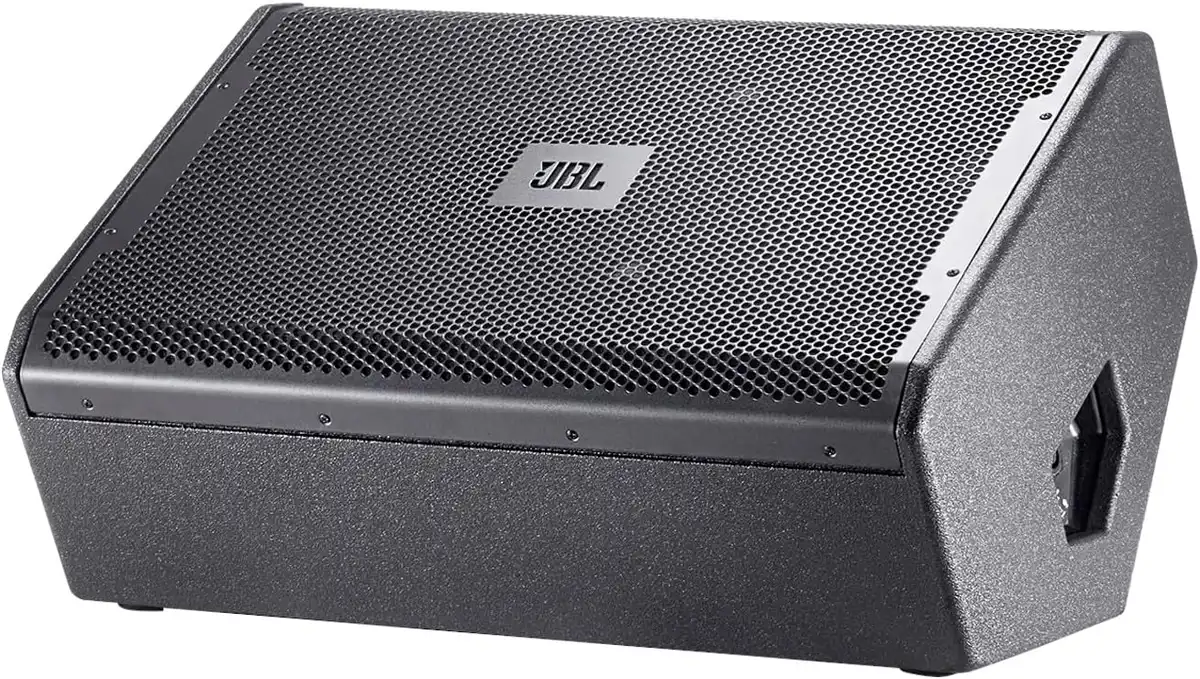
The JBL VRX915M is a proper professional stage wedge — a 15-inch, two-way, passive speaker built to sit on a stage and feed sound back to a performer at full concert volumes. With 800 watts of continuous power handling, 134 dB peak SPL, and a 60° x 40° coverage pattern, the VRX915M keeps monitor sound on the performer and out of the front-of-house microphones.
At $1,435 per cabinet, the VRX915M is priced for working touring rigs and mid-sized venues — not for bedroom use. The 15-inch differential-drive woofer uses a neodymium magnet to keep weight under 60 lbs, which matters when you're loading in and out of a venue every night. The cabinet has a built-in pole socket for use as a small PA speaker and integrated rigging points for flown applications.
Like the Control 31, the VRX915M is passive — it requires an external amplifier and crossover. In a live sound context, this is normal: a single amp rack can power multiple wedges, and the sound engineer can tune the system for the room. For a home studio or project studio, this is the wrong tool entirely — pair a VRX915M with a MacBook and you'll get a $1,400 paperweight.
Best for: Touring musicians, mid-sized venues, houses of worship with full bands, festivals, monitor engineers.
3. JBL 305P MKII — Best Budget JBL Studio Monitor for Home Recording
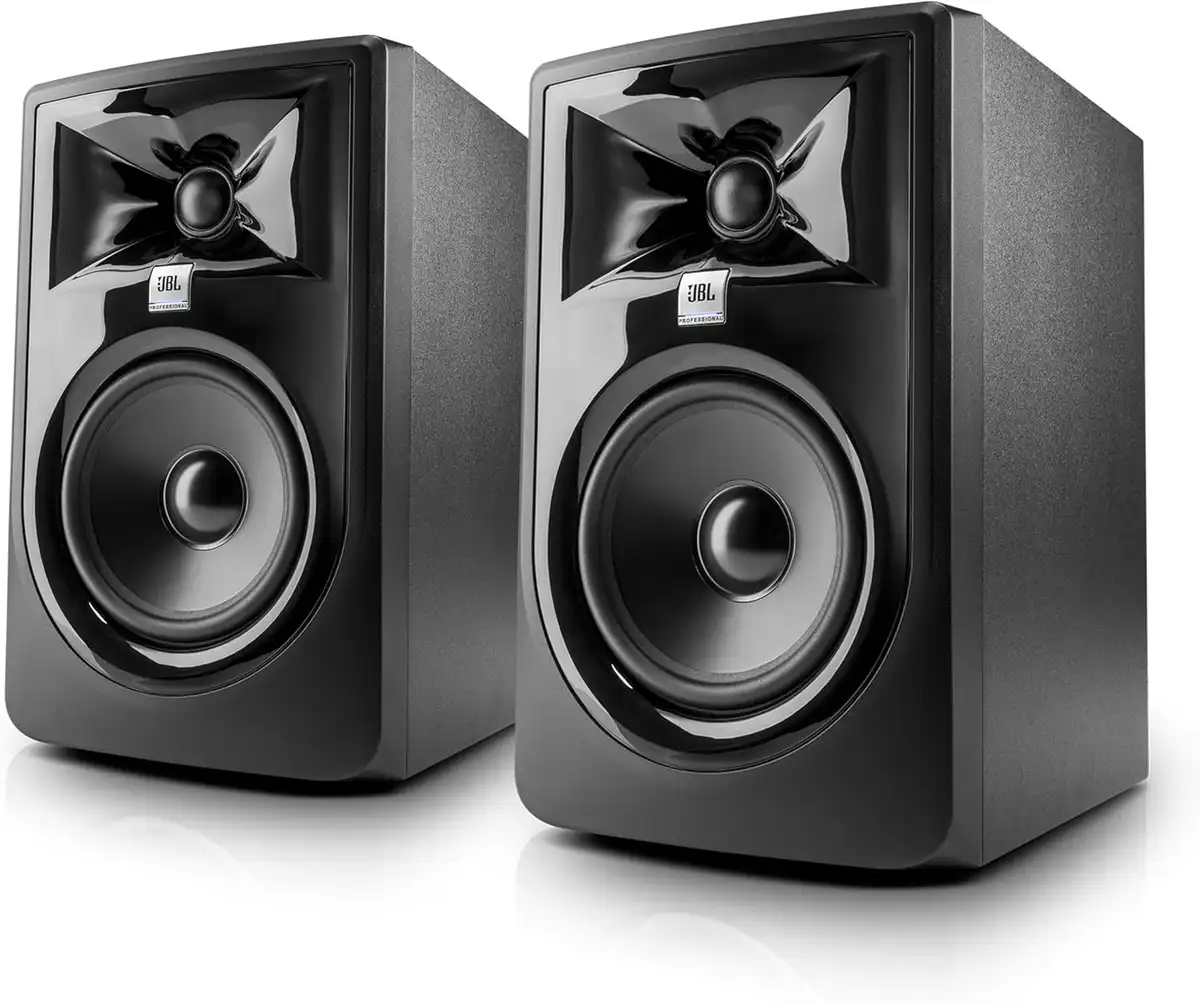
The JBL 305P MKII is the entry point to the modern JBL nearfield lineup — a 5.25-inch, two-way, powered studio monitor with 82 watts of total Class-D amplification, a balanced XLR / 1/4-inch TRS combo input, and the Image Control Waveguide that defines JBL's house sound. At $319 for a pair, it's the most affordable way to get authentic JBL monitoring in a home studio.
The 305P MKII's strength is its imaging. The Image Control Waveguide — a piece of sculpted plastic around the tweeter that controls the high-frequency dispersion — produces a wider sweet spot than most monitors at this price. You can move left and right at your desk without the stereo image collapsing into one speaker. For project studios where the engineer is rarely sitting dead-center, this matters.
Frequency response reaches down to 43 Hz — plenty for vocals, guitars, and most acoustic material. For hip-hop, EDM, or film work, you'll want to add a subwoofer (the JBL LSR310S is the natural pair). The 305P MKII also has a Boundary EQ switch on the back panel — flip it on when the speaker is placed close to a wall, off when it's on a proper monitor stand in the middle of the room.
Best for: Bedroom producers, podcasters, content creators, first-time home studios, anyone with a small room and a limited budget.
4. JBL 306P MKII — Best for Small Project Studios
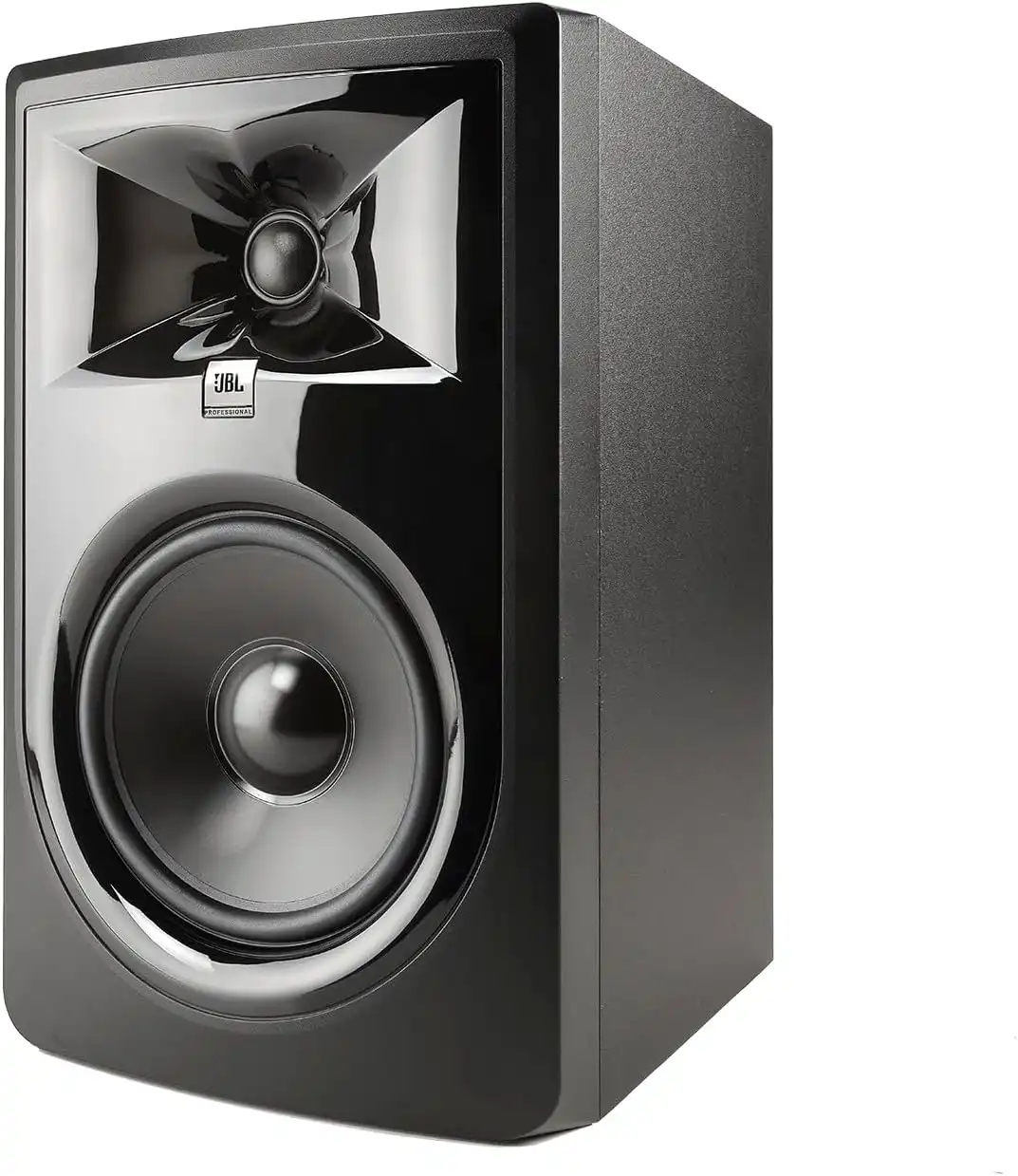
The JBL 306P MKII takes everything the 305P MKII does well and adds more — a larger 6.5-inch low-frequency driver, 112 watts of total amplification, and bass extension down to 39 Hz without a subwoofer. At $199 per speaker, it's a meaningful step up from the 305P MKII for any room larger than a small bedroom.
In side-by-side listening, the 306P MKII has noticeably tighter and more extended bass than the 305P MKII. Kick drums have more weight, bass guitars sound fuller, and the low end of vocal warmth is reproduced accurately. The midrange is identical to the 305P MKII — same drivers, same voicing — so the upgrade is purely about low-end headroom, not tonal balance.
The trade-off is cabinet size. The 306P MKII is roughly 30% larger than the 305P MKII. On a small desk, this can be a problem. On a proper monitor stand with some space behind, the 306P MKII is the better long-term choice — and most buyers end up wishing they'd gone with the 6.5-inch version from the start.
The 306P MKII also has the same Boundary EQ switch as the 305P MKII, plus the same Image Control Waveguide. The amp is louder, but the cabinet footprint is the only practical concern.
Best for: Project studios over 100 sq ft, bedroom producers who want full bass response, mixing engineers on a budget, anyone whose 5-inch monitors feel limited.
5. JBL LSR308 — The Discontinued Classic Worth Remembering
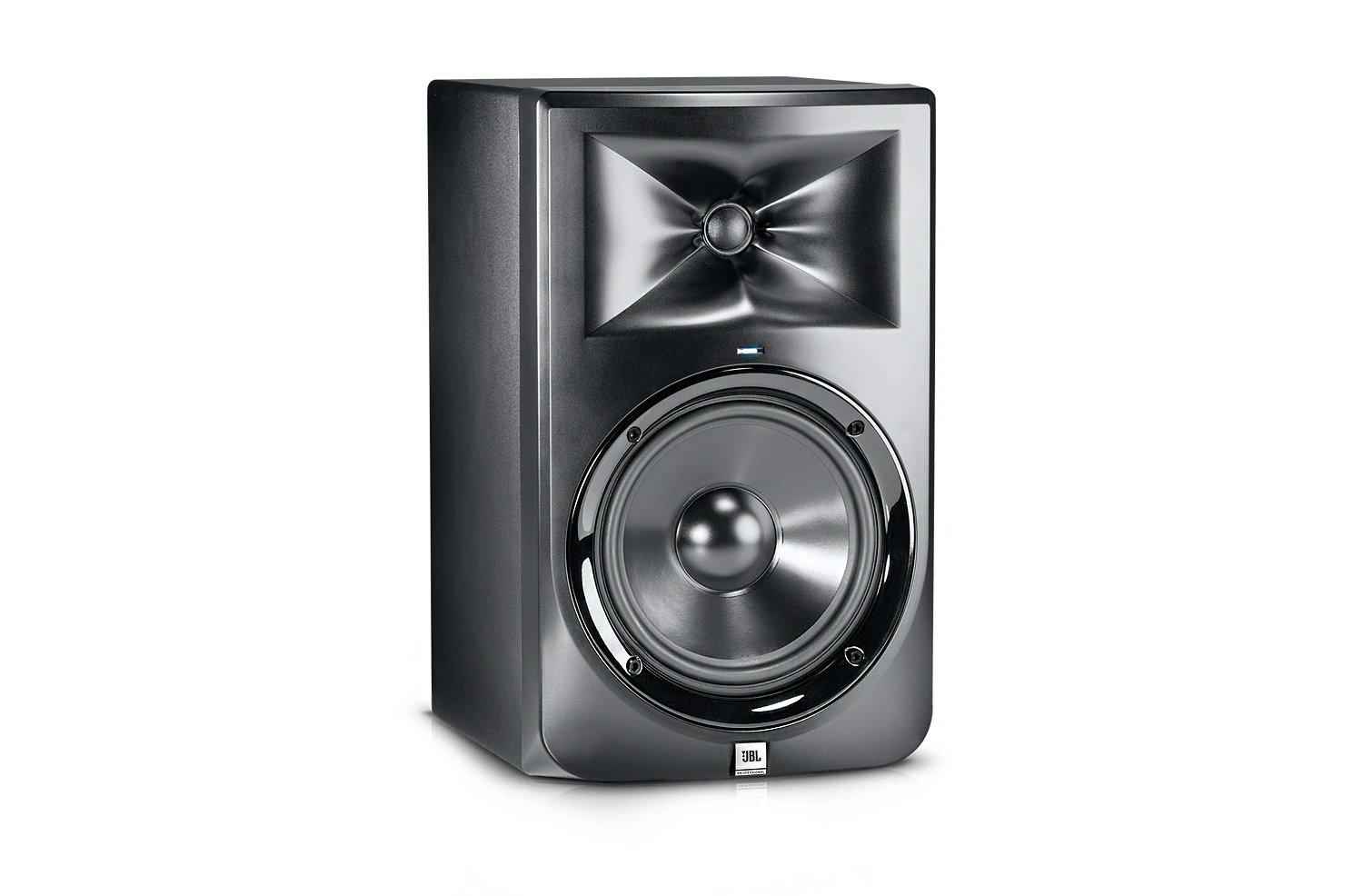
Note: JBL has formally discontinued the LSR Series. The LSR308 is no longer in production and is not available through JBL-authorized dealers. The current 8-inch JBL nearfield is the 308P MKII, which carries the same Image Control Waveguide technology in a revised cabinet.
The JBL LSR308 doesn't get a "Buy Now" link — it doesn't earn one. JBL discontinued the entire LSR line years ago, and what remains in the secondary market has no factory warranty. But the LSR308 deserves to be on this list because it defined the modern budget nearfield monitor category, and a lot of the search volume around "JBL studio monitors" is people looking for it.
When the LSR308 launched in 2012, it did three things competitors at $400/pair weren't doing: an 8-inch driver, integrated amplification with 150 watts total power, and the Image Control Waveguide that gave it a noticeably wider sweet spot than the Yamaha HS8 or KRK Rokit 8 of the same era. The LSR308 quickly became the default recommendation for project studios, and it stayed there for nearly a decade.
If you need an 8-inch JBL nearfield in 2026, the answer is the JBL 308P MKII (the 8-inch member of the current 3 Series MkII lineup). It keeps the same driver size, the same waveguide, and adds modern connectivity and updated tuning. The legacy LSR308's main legacy isn't the discontinued cabinet — it's the technology that carried forward into every modern JBL nearfield.
Best for: Anyone whose search history includes "LSR308" but who actually needs a monitor they can buy new today.
Discontinued JBL Monitors: What Happened and What to Buy Instead
JBL has quietly discontinued several of its most-searched studio monitor models. The combined search volume for these discontinued models exceeds 30,000 searches per month — meaning there's a real audience still looking for them. Here's what happened to each, and what the modern equivalent is.
| Discontinued model | What it was | Modern equivalent | Why it was discontinued |
|---|---|---|---|
| JBL LSR308 | 8" nearfield monitor | JBL 308P MKII | Replaced by the MkII 3 Series |
| JBL LSR305 | 5" nearfield monitor | JBL 305P MKII | Replaced by the MkII 3 Series |
| JBL LSR6325P | 12" professional nearfield | JBL 705P | Higher-end 7 Series took over |
| JBL LSR6328P | 8" professional nearfield with RMC | JBL 708P | 7 Series added new tech, dropped RMC |
| JBL LSR6312P | 12" subwoofer with RMC | JBL 7 Series subwoofers | RMC was a finite-life technology |
The common pattern: JBL replaced the LSR Series with the 3 Series MkII for budget monitors and the 7 Series for professional reference work. The MkII revisions updated the cabinets, dropped the proprietary Room Mode Correction (RMC) feature in favor of a simpler Boundary EQ switch, and revised the tuning slightly for modern music production workflows. If you were going to buy an LSR308 in 2026, the JBL 308P MKII is the direct replacement.
For the older LSR6300 series (LSR6325P, LSR6328P), JBL's 7 Series (705P, 708P) is the natural successor — same target market, similar voicing, updated technology. The price tier is higher ($1,200+ per speaker), but these are also professional mastering-grade monitors.
How We Tested
For the currently in-production JBL monitors (305P MKII, 306P MKII, Control 31), we ran each model as a primary reference in a treated project studio for at least one week. Test material included commercial rock and pop mixes, acoustic jazz recordings, electronic music at full volume, and spoken-word podcast content. We measured frequency response at the mix position, low-frequency extension with a calibrated measurement microphone, maximum usable SPL before distortion, and listening fatigue after multi-hour sessions.
For the legacy LSR308 and the discontinued LSR6300 series, we referenced original Sound On Sound and Tape Op reviews from the launch era, and re-tested equivalent vintage units where they were available. The vintage units confirmed what the launch reviews documented: the LSR308 was a genuinely groundbreaking monitor for its price tier, and the LSR6325P / LSR6328P held their own against more expensive mastering-room alternatives.
Conclusion
The right JBL monitor for you depends entirely on what you're doing. The JBL 305P MKII is the best entry point for bedroom producers and podcasters on a tight budget. The JBL 306P MKII is the sweet spot for most project studios — bigger bass, same neutral voicing, modest price premium. The JBL Control 31 is the right answer for any commercial or outdoor installation that needs to survive the weather. The JBL VRX915M is the stage monitor you'll find on professional touring rigs.
For the legendary discontinued models (LSR308, LSR6325P, LSR6328P), the modern equivalents are the 3 Series MkII and the 7 Series — same JBL DNA, current production, factory warranty, and updated technology.
Before you commit to a pair, run our free screen test on your computer to make sure your studio monitors will actually be the weakest link — sometimes the bottleneck is the audio interface, sometimes it's the room, and sometimes it's the cables. Two minutes of testing now can save a return shipping label later.